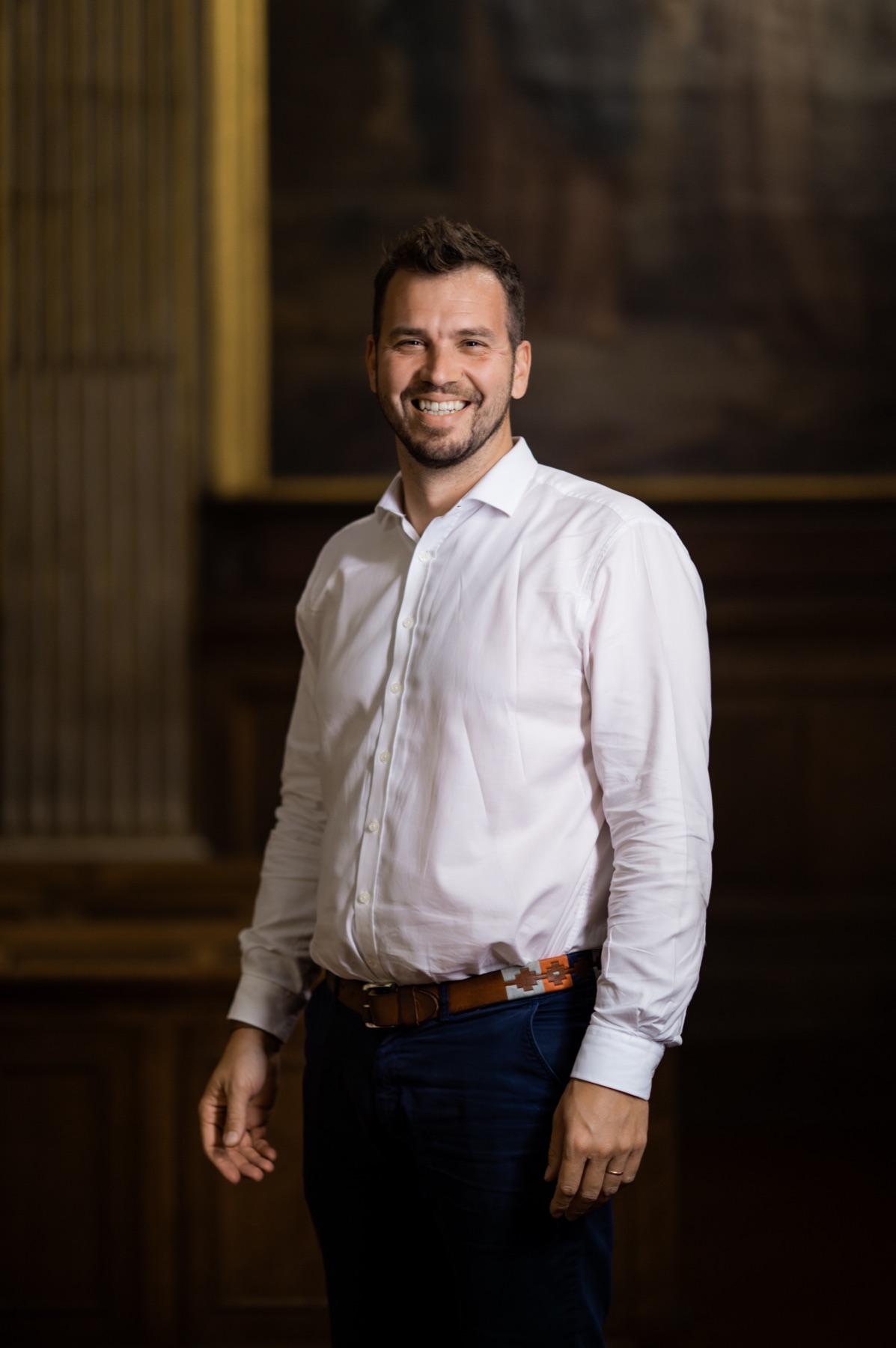
What I did not learn in an institution
I did not study at Boulogne, nor at the CNSM. I had no writing class where my fugues were corrected, no group orchestration year. It is a real gap: I do not play it down. I had to make up alone for things that a structured course would teach in two semesters.
But here is what happened: between 2019 and 2021, I joined a composition programme founded by Olivier Bardot. Not a conservatoire, not a diploma: a demanding, individual framework, where I was pushed to write for real singers, to hear my pieces in rehearsal, to rework them in the light of the result.
What it changes when you write for the congregation
The conservatoire trains you towards a certain ideal: the perfect, self-standing piece, the one you defend in a concert or a competition. That is precious. But it is not what a hymn for a parish congregation calls for.
A church hymn is measured against something else: does it hold in the mouth of a 65-year-old worshipper who has not rehearsed? Is the refrain caught on first hearing? Does the range sit comfortably without forcing the voice? None of these questions is assessed in a classroom. They are assessed only in a nave, on a Sunday morning, before a people who is trying.
My path outside any institution forced me to learn writing through that confrontation, not through academism. That is no doubt why my hymns, when they work, work fast.
What I lack, and keep on seeking
There are things a course would have shortened. Large-form orchestration, for instance, I learn piece by piece. Historical analysis (knowing where a musical gesture comes from, which tradition it belongs to) I make up for by reading and listening. It is slower. It is less systematic. But it gets done.
Above all, I keep working with composers and conductors who pull me up, correct me, push me. Not having gone through the conservatoire does not mean having no masters: I have had them, I still do. They simply came another way.
The advice I would give
If I am asked today, “must you attend a conservatoire to become a composer of sacred music?”, my answer is: it depends on what you want to write. For large symphonic sacred form, yes, probably. For hymns that let a congregation breathe, perhaps not. What matters then is to sing a great deal, to listen even more, and to find a framework (a community, a programme, a mentor) where you are held to account.